Social Media Exchange: How Community Engagement Networks Work
Last updated: March 10, 2026
A social media exchange is a community-based system where users help promote each other’s content through small engagement actions such as likes, follows, views, subscriptions, and similar interactions. Instead of relying on automated activity, these platforms are typically structured around participation between members.
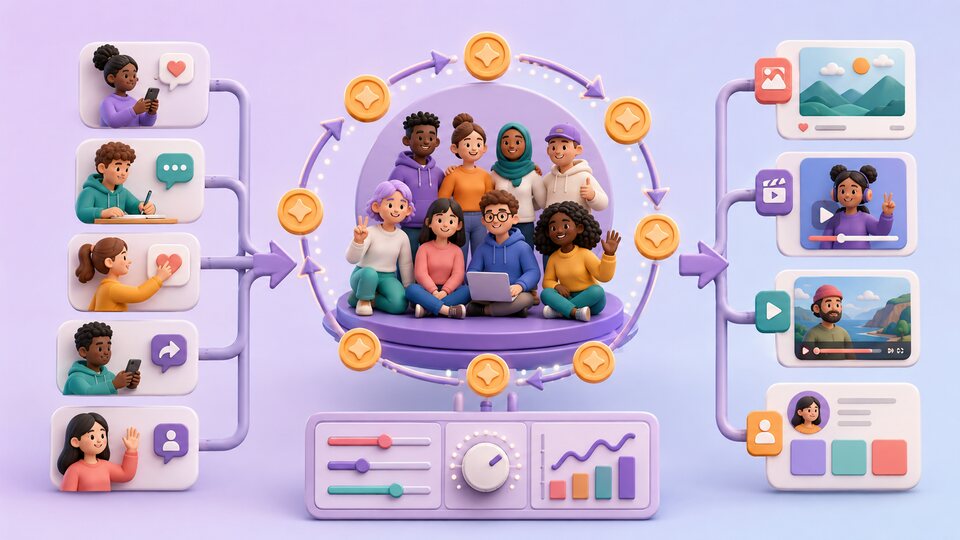
In most cases, the model works through credits. A member completes interactions for other users, earns credits, and then uses those credits to promote their own content. This creates a simple exchange cycle that supports visibility testing across different social platforms.
How Social Media Exchange Platforms Work
Most platforms in this category use a straightforward participation model:
- Create an account and join the community.
- Add a page, profile, post, or video you want to promote.
- Earn credits by interacting with other members’ content.
- Spend those credits to receive engagement on your own content.
Because this system is community-driven, delivery speed usually depends on overall platform activity, user demand, and the number of active members participating at a given time.
Common Types of Social Media Exchanges
A social media exchange network may support different forms of engagement depending on which public interaction features a platform allows.
- Like exchange for posts, videos, or pages
- Follow exchange for profile growth
- View exchange for video exposure
- Subscription exchange for channels and creators
- Comment-related exchanges on selected platforms where supported
Not every network supports every interaction type equally, which is why platform-specific expectations matter.
Supported Platform Areas
Community engagement systems are often discussed in relation to platforms where early activity signals can influence visibility. On Like4Like, users often explore areas such as:
- TikTok likes for early post engagement
- TikTok followers for profile growth testing
- TikTok views for initial reach signals
- Instagram likes for post-level interaction
- Instagram followers for account visibility
- Instagram views for video exposure
- YouTube subscribers for channel support
- YouTube likes for video reach
- Facebook likes for post/page engagement
These pages help explain how exchange-style promotion differs across individual platforms, because visibility systems do not work exactly the same everywhere.
Why Creators Use Social Media Exchange Networks
People use these systems for different reasons, but the most common goal is not instant fame. More often, creators want to:
- Test early engagement signals on new content
- Support visibility during the first stage after publishing
- Promote newer profiles or projects
- Experiment with how social platforms respond to initial activity
- Participate in a reciprocal promotion community
For many users, exchange networks function more like a visibility tool than a full growth strategy.
Why Social Media Exchange Is Not the Same as Organic Growth
It is important to keep expectations realistic. A social media exchange can help generate early activity, but it does not replace strong content, audience interest, retention, credibility, or platform trust signals.
Sustainable growth still depends on whether real viewers continue watching, following, sharing, and returning over time. Exchange-based engagement may help support exposure testing, but it is not the same thing as building a loyal audience.
This is why many creators use exchange systems as one small part of a broader strategy rather than as a complete solution.
Community Participation Matters
A core feature of most social media exchange systems is that they depend on member participation. If more users are active, the network tends to move faster. If fewer users are active, delivery may slow down. That makes the exchange model fundamentally different from fixed ad buying or guaranteed media distribution.
In other words, this type of platform is built around community activity rather than passive automation.
Learn More About Related Exchange Models
A social media exchange can include several different participation models depending on the type of public interaction involved. Some creators are specifically looking for a like exchange system, while others want a broader engagement exchange model that includes multiple types of activity.
These related concepts help explain how community-based visibility systems work across different platforms and why interaction type matters when evaluating promotion methods.
Social Media Exchange FAQ
What is a social media exchange?
A social media exchange is a structured community where users promote one another’s content through reciprocal engagement actions such as likes, follows, views, or subscriptions.
How does a credit-based exchange system work?
Members earn credits by completing interactions for other users. They can then spend those credits to request promotion for their own content inside the same system.
Is social media exchange the same as organic growth?
No. Organic growth depends on audience behavior, content quality, retention, and long-term trust. Exchange-based activity may help with early visibility testing, but it does not replace genuine audience development.
What interactions are usually included?
Common types include likes, follows, views, subscriptions, and sometimes comments, depending on the platform and the features supported.
Why do creators use social media exchange networks?
Most creators use them to test exposure, gain early activity signals, support newly published content, or participate in a reciprocal promotion community.
Explore Community-Based Promotion on Like4Like
Like4Like is built around the idea of community-based social media exchange, where members participate directly and use a credit model to support visibility across selected platforms.
To explore specific promotion types, you can continue with pages about TikTok likes, TikTok followers, TikTok views, Instagram likes, and Instagram followers.