
Objective
The campaign has one primary outcome and a measurement window.
 Login
Login
 Register
 Blog
Blog

Scaling increases distribution. It does not repair an unclear message, mismatched audience, broken destination, or unreliable measurement. Increase spend only after the content and operating system pass defined readiness checks.
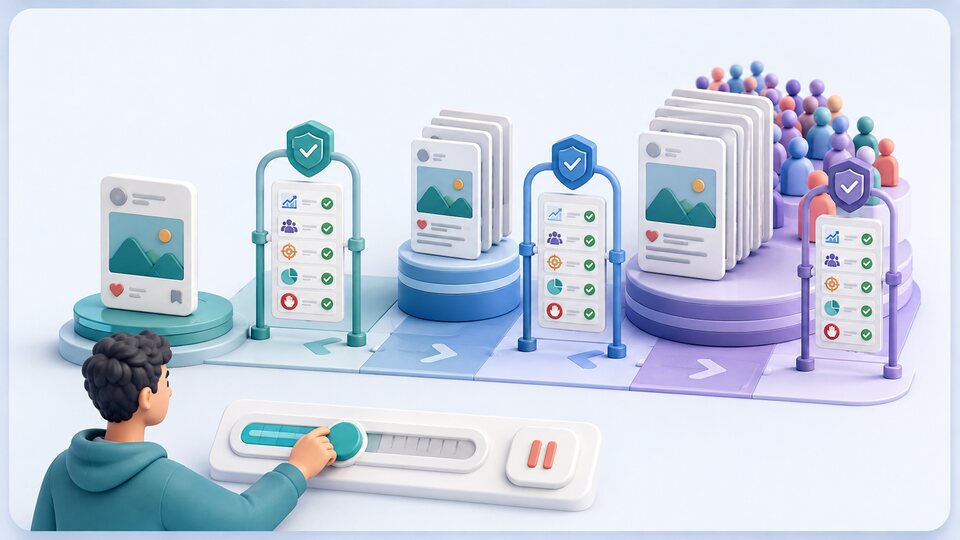
The campaign has one primary outcome and a measurement window.
The creative has produced a useful response from a relevant test audience.
The profile, page, product, or next action fulfills the promoted promise.
Targeting reflects who can reasonably benefit or respond.
Budget cap, tracking, review interval, and stop conditions are set before launch.
If these gates have not been tested, start with Testing Visibility Before Paid Ads.
| Stop or review trigger | Why it matters | Next action |
|---|---|---|
| Tracking fails | The result cannot be attributed reliably | Pause and repair measurement |
| Audience quality falls | Scale is reaching less relevant people | Narrow or revise audience |
| Attention or retention weakens | Creative fatigue or poor fit may be rising | Refresh creative or hold scale |
| Destination behavior breaks | Traffic does not complete the intended path | Fix the landing experience |
| Marginal cost exceeds the limit | Additional distribution no longer fits the objective | Stop or reallocate budget |
For account and platform controls, review How to Reduce Platform Risk While Growing.
When the objective is clear, creative produces useful relevant response, the destination works, measurement is reliable, and controls are defined.
No. Promotion should serve a defined objective; many posts exist for community, experimentation, support, or learning.
It can increase distribution but cannot guarantee relevance, attention, retention, conversion, or long-term audience interest.
You can also purchase promotion directly and start gaining followers and likes immediately, without registration.