
Faster audience discovery
Social distribution can place a new resource in front of relevant people before it has meaningful search visibility.
 Login
Login
 Register
 Blog
Blog

Social media can help more people discover a useful page, visit a website, remember a brand and sometimes reference the original resource. Those outcomes can strengthen a broader marketing program. That is different from claiming that follower counts, likes or shares automatically raise a webpage's search ranking.
Google's public documentation emphasizes helpful, reliable, people-first content, crawlable pages, understandable links and compliance with spam policies. It also states that links help Google discover pages and act as a relevance signal. That makes the old claim that “link building is completely dead” incorrect.
The safer distinction is between editorially earned links and links created mainly to manipulate rankings. A genuinely useful resource may earn references after people discover it. Buying or manufacturing link patterns is a different activity and can violate search spam policies.
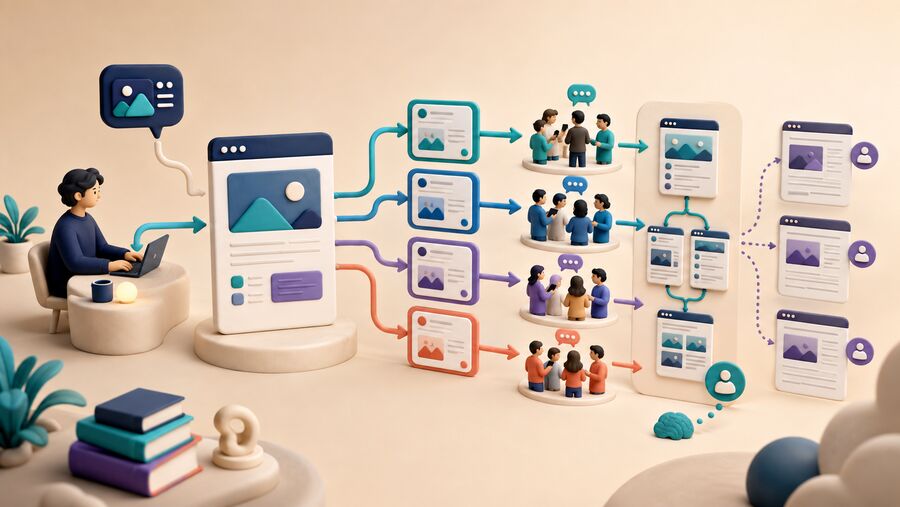
Social distribution can place a new resource in front of relevant people before it has meaningful search visibility.
People can move from a social post to the full page, then explore related pages, products or guides on the website.
Writers, researchers or community owners cannot cite a resource they never encounter. Distribution creates the opportunity; quality earns the reference.
Repeated useful exposure can help people remember a brand and later search for its name, product or area of expertise.
Relevant questions and discussions can reveal missing explanations, better examples and follow-up topics for the website.
Public content from social and video platforms can itself appear in Google Search, creating another route for people to encounter a creator or brand.

A post can receive many interactions while the linked page gains no lasting search improvement. A search increase can also occur for reasons unrelated to social activity. Use campaign parameters and analytics to separate channels, then compare trends carefully.
| Question | Useful evidence | Avoid assuming |
|---|---|---|
| Did social distribution send website visitors? | Referral sessions, landing pages and campaign parameters | Every reaction became a visit |
| Did visitors find the page useful? | Engaged sessions, internal navigation and relevant conversions | Traffic volume alone proves quality |
| Did brand discovery grow? | Branded query trends and direct-return behaviour | One short spike represents durable demand |
| Did the resource earn references? | New editorial links and referral sources | Every social share acts like an editorial backlink |
| Did search performance change? | Search Console impressions, clicks, pages and queries | Social activity was automatically the cause |
Useful promotion helps the right people encounter a resource. It should not become a system for buying backlinks, mass-producing duplicate posts or forcing artificial mentions. Google documents link spam and other attempts to manipulate ranking systems as practices that can lead to reduced visibility or removal from results.
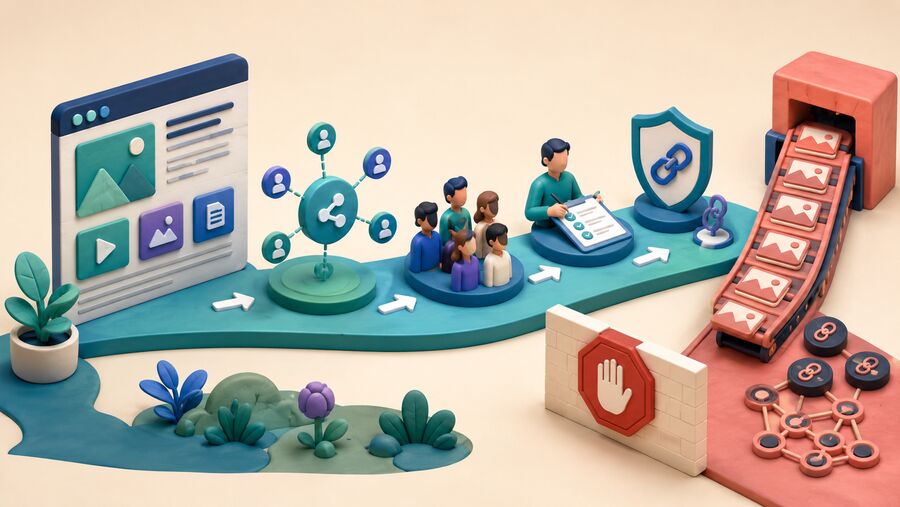
Google's public SEO guidance does not present social-like counts as a direct ranking control. Treat them as platform engagement, not as a guaranteed search-ranking input.
Yes. Google states that links help it discover pages and are used as a relevance signal. Editorially earned links are different from link schemes intended to manipulate rankings.
Yes, eligible public content from social and video platforms may be discovered through Google Search. Search Console may provide performance insights for supported content.
Publish one strong website resource that answers a real customer question, distribute it where the relevant audience participates and measure actual visits and engagement.
You can also purchase promotion directly and start gaining followers and likes immediately, without registration.