 Login
Login
 Register
 Blog
Blog


Instagram Watch Time and Retention
A view start tells you that playback began. Retention tells you whether the video continued earning attention. The most useful analysis combines average watch time, completion, replay, and the points where viewers leave.
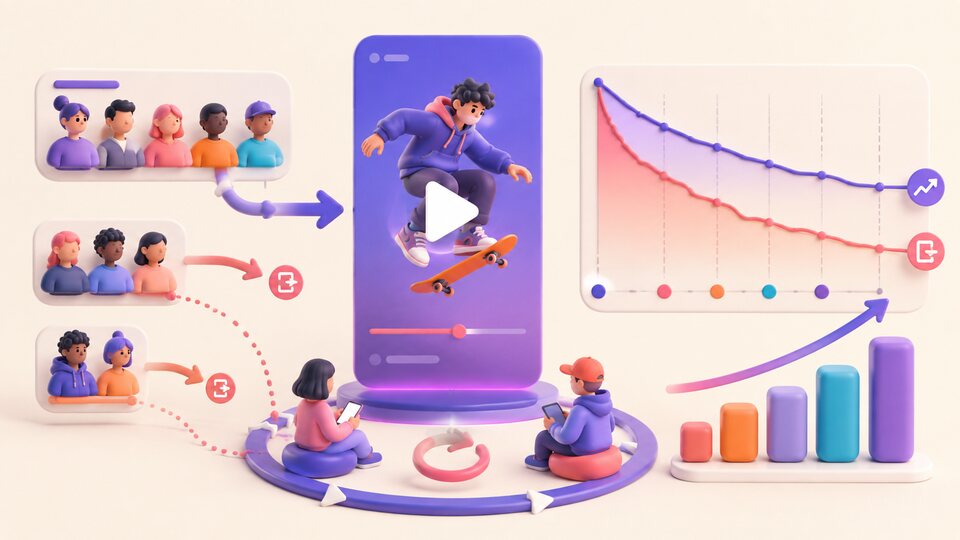
Read the metrics together
| Metric | Useful question | Important limitation |
|---|---|---|
| Average watch time | How much of the video did a typical viewing session consume? | It must be interpreted against video length. |
| Completion | How often did viewers reach the end? | Short videos naturally have a different context. |
| Replay | Did viewers choose or need to watch again? | A replay can reflect interest or confusion. |
| Drop-off | Where does attention weaken? | One post is not a stable benchmark. |
Diagnose the reason viewers leave
Early drop
The opening may be unclear, slow, or different from what the cover and caption promised.
Middle drop
The video may repeat itself, add unnecessary context, or delay the main payoff.
Late drop
The conclusion may be predictable, too long, or lack a reason to remain.
High replay
Check whether the detail is valuable and dense, or simply difficult to understand on one view.
Improve retention without tricks
- Show the subject before introducing yourself.
- Deliver one clear idea per video.
- Cut pauses, repetition, and decorative scenes that add no value.
- Use readable visual changes to maintain orientation.
- Let the ending complete the promise made at the start.
Watch time is important, but not isolated
Viewer satisfaction can also appear through shares, comments, follows, negative feedback, and later viewing choices. Retention should therefore be interpreted with the full engagement picture and the distribution stage.
External exposure can create more opportunities to watch, but it cannot make an uninterested audience remain.